
SERVICES: CUSTOM SOLUTIONS
Translating Neuroscience into Competitive Advantage
Where Innovation Meets Human Physiology
Technologies once reserved for elite medical teams, high-performance labs, and world-class athletes — are now accessible to any organization ready to invest in its most valuable infrastructure — their people.
Custom Solutions provides tools, technology, and training to help teams reset faster, think clearer, and perform from a place of regulated intensity instead of chronic urgency.
If you’re exploring how performance science can strengthen focus, creativity, and resilience across teams, this is where that conversation begins.
The Infrastructure of Sustained and Sustainable Performance
Most companies know how to optimize for efficiency.
The wisest are learning how to optimize for capacity.
Change isn’t slowing — it’s compounding.
Technology evolves faster than teams can absorb.
Markets are transforming faster than culture can adapt.
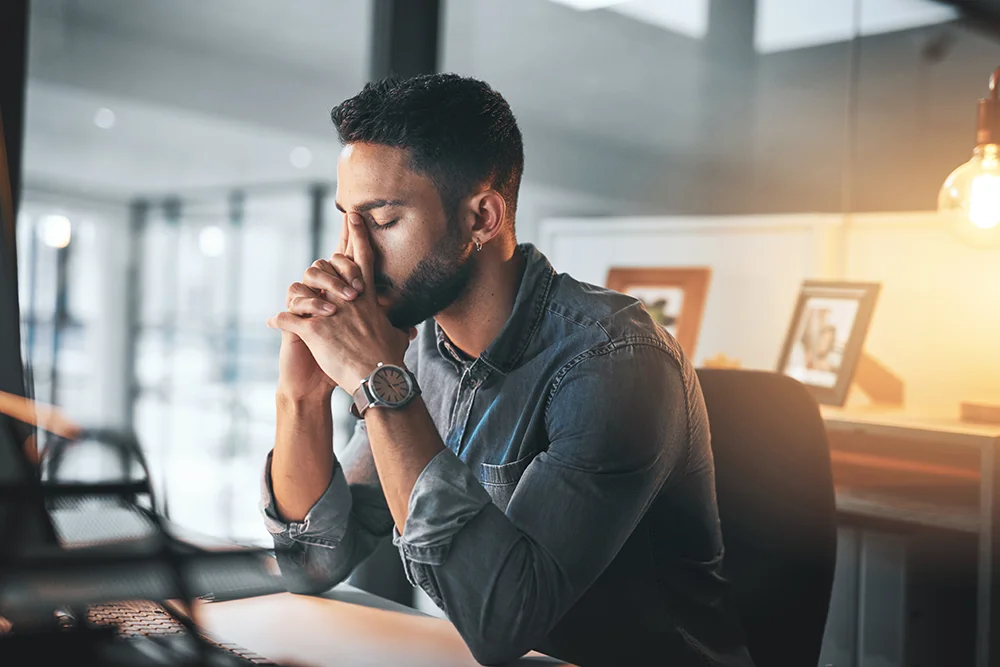
And in the middle of that acceleration, people are reaching their limits.
Stress, distraction, and turnover aren’t separate problems;
they’re symptoms of one issue — systems stretched beyond the ability to recover. And now, people need more intelligent systems of support.
We now understand more about neuroplasticity, attention, and adaptation than ever before.
The takeaway is simple: the next era of performance depends on the body’s ability to flex, reset, and sustain clarity under pressure.
Leaders can’t remove uncertainty,
but they can prepare their people to meet it — calm, clear, and creative.
Physiological resilience isn’t a wellness perk.
It’s operational infrastructure for human performance.
When the nervous system can regulate well, people don’t burn out when things accelerate.
They synchronize.
They adapt.
They sustain excellence through volatility.
That’s performance in practice —
calm in the noise,
clarity under pressure,
creativity in the face of constraint.
How It Works — Technology in Practice
Every organization’s system looks a little different.
But most begin with a few core technologies — tools that use light, sound, and vibration therapy to help the body recover and the brain refocus in real time.
These are compact, quiet, and simple to operate — designed to fit into the flow of a modern workplace.
Core technologies often include:
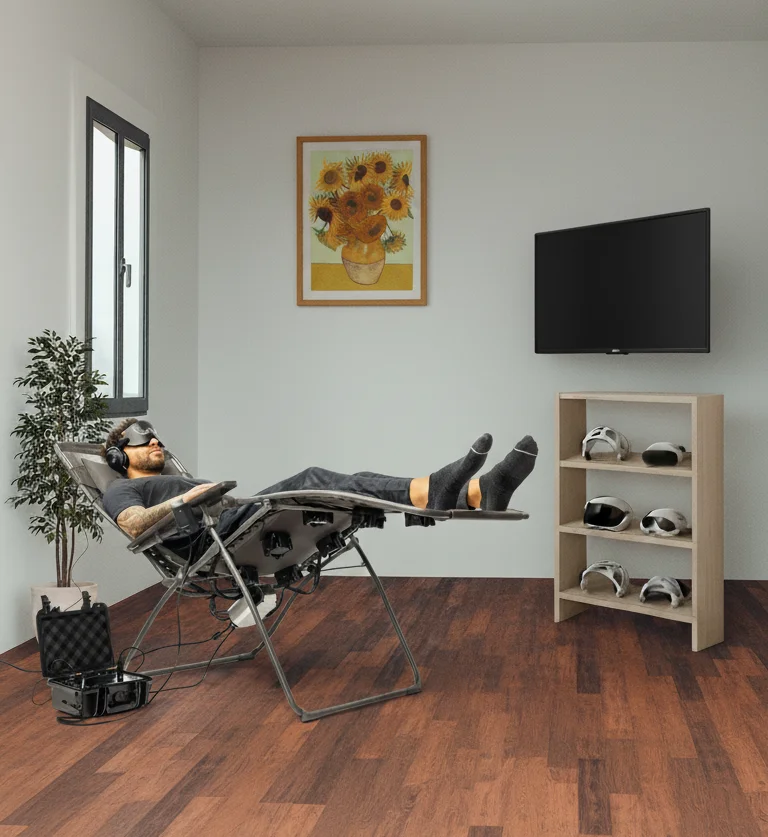
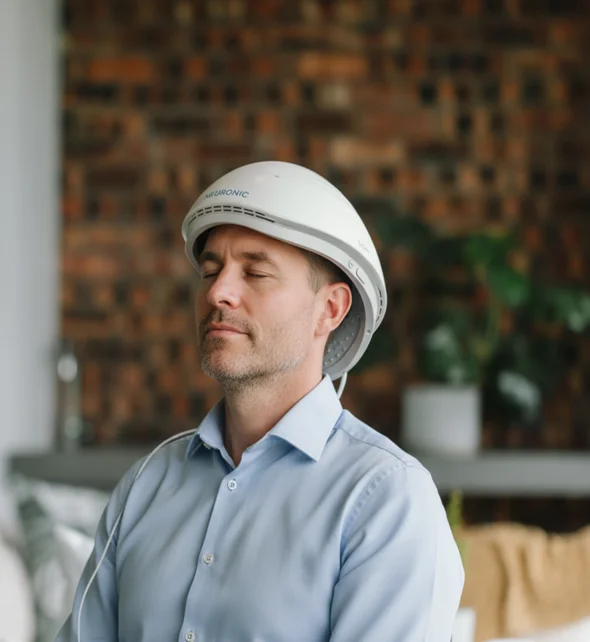
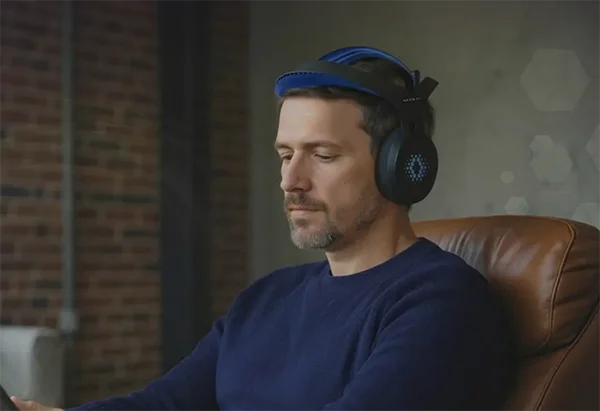
A photobiomodulation or neurofeedback headset adds a second layer — supporting neural regulation and energy restoration through gentle light or real-time brainwave feedback. These headsets are roughly the size of a bike or VR helmet, easy to sanitize, and stored neatly on a shelf or small unit.
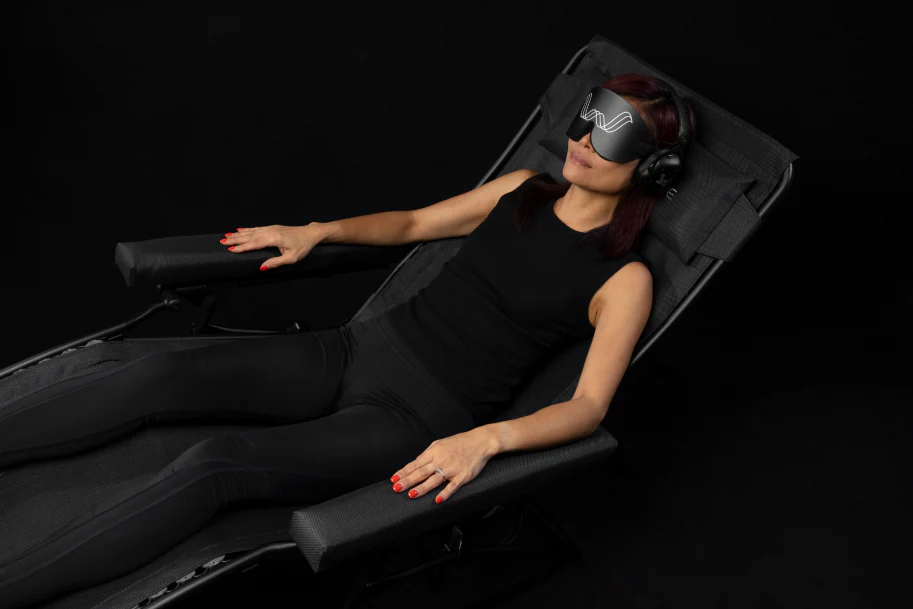
A vibration therapy chair provides the foundation. It reclines like a contemporary lounge chair and delivers precise, rhythmic vibration patterns that help the nervous system downshift from drive to recovery.
Some organizations add complementary modalities — guided breathwork, HRV biofeedback, or environmental lighting tuned for circadian regulation — while others begin with a single setup.
The goal is the right combination of equipment for your environment. Our process always begins with a diagnostic phase that identifies how your teams respond to demand, focus, and recovery. From there, we design the configuration that best supports your people — whether that’s one quiet chair in a leadership suite or a dedicated room serving multiple teams.
The experience is quick and scalable. A session typically lasts 10–20 minutes, giving the nervous system space to reset without disrupting the workday.
Each environment is designed to restore clarity, focus, and physiological balance — the foundation for sustainable performance at every level.
From Clinics to Companies — The New Scalability of Performance Science
These principles translate wherever people need to perform, care, or recover under pressure:

Sustain deep focus, creative thinking, and decision clarity — even through high-stakes projects and rapid change.

Restore composure and precision between surges of intensity; recover faster after demanding shifts.

Build readiness and recovery that go beyond physical strength or stamina.

Reduce fatigue and cognitive drift; maintain empathy, coordination, and accuracy under sustained load.

Help students and teachers shift from anxious to attentive; create calm, focused learning environments.

Ease agitation, lift mood, and support steadiness, cognition, and confidence through gentle, regulation-based routines.

Enhance reaction speed, optimize recovery, and sustain flow when precision and timing matter most.
From Individuals to Organizations — Measurable Outcomes in Action
These are the measurable shifts leaders can see, track, and scale.
Cognitive
Performance
Clearer focus, faster processing, fewer errors under pressure
Better decision quality and strategic precision when conditions change
Creative
Capacity
Increased flow frequency and cognitive flexibility
Sustained innovation and adaptive problem-solving
Emotional
Regulation
Faster recovery after stress; lower reactivity and fatigue
Stronger collaboration, leadership presence, and psychological safety
Operational
Reliability
Improved alertness, attention, and error detection
Greater consistency, reduced risk, and higher reliability
Cultural
Resilience
Higher engagement, adaptability, and retention
A culture that sustains performance without burning people out
Testimonials
The Custom Solutions Framework
From neuroscience to measurable organizational resilience
Every organization operates under different pressures — market dynamics, team culture, and cognitive load.
Our framework translates performance science into systems that strengthen resilience at scale.

Discovery — Baseline and Business Case
We begin with a clear diagnostic — understanding your organization’s goals, identifying high-pressure points, and mapping how those demands affect focus, collaboration, and recovery across teams. The outcome is a concise business case that defines where physiological resilience strengthens performance — and where targeted support will deliver the greatest impact.
Design — System Architecture
Insight becomes strategy.
Together, we translate insights into an adaptive model — combining technology, training, and environmental design.
This phase defines how resilience becomes operational: from individual recovery tools to team-wide integration.
Deliver — Launch, Measure, Evolve
Implementation is guided by our multidisciplinary team of neuroscientists, clinicians, and performance coaches.
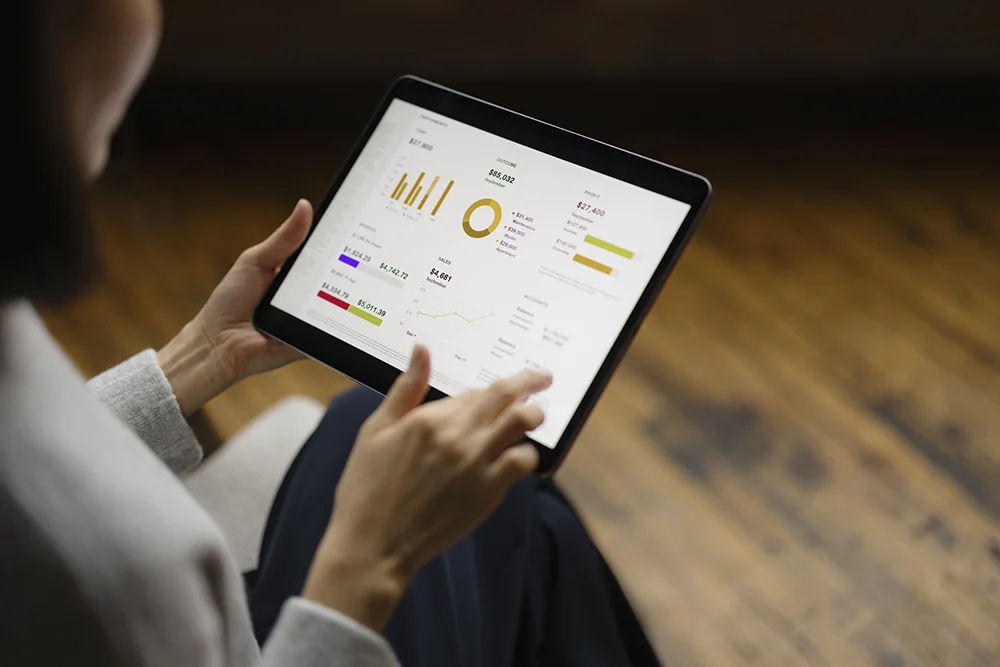
Progress is tracked, outcomes are quantified, and systems are refined over time — ensuring that resilience is not a one-time initiative, but a measurable capability.
If you’d like to explore what Custom Solutions could look like inside your organization, let’s start a conversation. Click Here.
FAQs
Below are the most common questions leaders ask when exploring how this technology and training integrate into their environments.
Hidden Open Toggle
Your content goes here. Edit or remove this text inline or in the module Content settings. You can also style every aspect of this content in the module Design settings and even apply custom CSS to this text in the module Advanced settings.
How much space does it require?
A single setup — one chair and one headset — fits comfortably in a 6′ x 8′ space, about the size of a small office nook or wellness room. Multiple setups can be placed side by side with minimal noise overlap.
How long is a session?
Most sessions last 10–20 minutes — even five minutes can make a measurable difference. With a 20-minute session and a short buffer between users, a single chair can serve roughly 18–20 employees in a typical workday.
What kind of room setup works best?
Any quiet, low-traffic space works. Dimmable lights help, but many of the headsets include built-in eye covers and headphones for sound and light reduction.
How is the equipment maintained?
Each unit wipes clean between uses with standard disinfectant wipes. No ongoing consumables or specialized cleaning processes are required.
How many pieces of equipment does an organization need?
That depends on scale and demand. Smaller offices often start with one or two chairs and two to three headsets as part of the core technology setup, while larger teams — such as emergency services or healthcare departments — may deploy four or more chairs and multiple headsets to match shift rotations or high-intensity work patterns.
Can sessions be booked or scheduled?
Yes. Many organizations simply add the recovery room to their existing booking systems (the same way they would a meeting room), or they run sessions on a first-come basis.
Is it just the equipment?
Our programs can integrate technology with expert-led sessions on sleep optimization, breathwork, recovery, and cognitive resilience. Each program is customized to your organization’s goals, culture, and schedule.
Who are your trainers?
Our facilitation and training network brings together experts from neuroscience, clinical performance, and elite team coaching.
They include faculty-level researchers, former military and Olympic performance coaches, and clinicians who specialize in brain health and recovery science.
We match each organization with specialists whose expertise aligns to its goals — from leadership clarity to cognitive endurance.
Does our organization need special training?
The technology itself is intuitive and easy to use — most teams become comfortable within minutes. What matters most isn’t just how to operate the equipment, but why and when to use it for the greatest benefit.
We provide simple onboarding and quick-reference guides for everyday users, plus optional advanced training for internal champions and Occupational Health & Safety (OH&S) teams.
This ensures your organization can manage sessions confidently, maintain standards, and embed the science into your culture.
Is the equipment for sale or lease?
We offer both purchase and lease options.
Most organizations begin with a lease, which includes onboarding, training, and continuous equipment updates — ensuring access to the latest technology as the field evolves.
When devices are replaced or upgraded, they’re refurbished and redirected through our Social Impact Investing program, extending access to schools, first responders, and community organizations.
How long does it take to get started?
Most programs are operational within four to six weeks from agreement.
The timeline depends on your preferred configuration, number of locations, and training depth.
Our team handles installation, calibration, and onboarding — ensuring minimal disruption and immediate usability once deployed.
Is the technology supported by research?
Yes. All core modalities — vibration therapy, photobiomodulation, and neurofeedback — are validated across multiple fields of neuroscience, performance psychology, and rehabilitation research.
Our partnerships and methods are informed by work conducted at leading universities and innovation labs globally.
Please click here to see our tech summaries and research dossiers.
Is any personal data collected?
No personal or identifying data is collected or stored without explicit consent.
Session information is anonymized and used only to optimize user experience or aggregate performance insights for organizational reporting.
We adhere to the highest data privacy standards, including GDPR and applicable local regulations.
Can the programs be tailored for different roles or departments?
Absolutely. Each environment is designed around your organization’s structure and workflow.
We tailor session formats and coaching content for different roles — from leadership and decision-making to high-intensity frontline teams — ensuring the right tools reach the right people at the right time.
What ongoing support is provided?
Every program includes access to our technical support and performance consulting team.
We provide continuous updates, maintenance, and remote diagnostics for leased equipment, along with quarterly progress reviews and usage analytics where available.
Our commitment continues well beyond installation. Our goal is to ensure every system remains calibrated, current, and consistently effective over time.