
Red Light Therapy for Brain Fog and Memory: What the Science Actually Shows
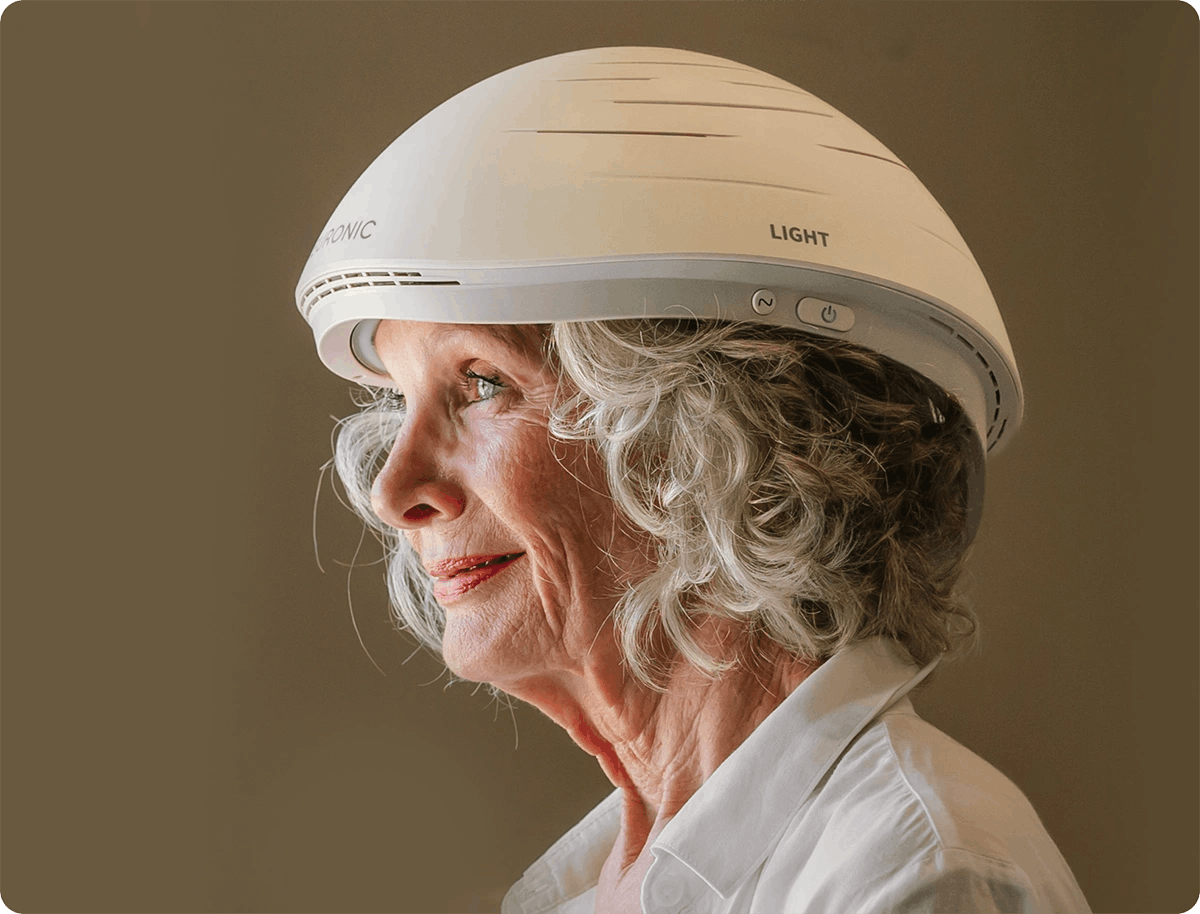
You used to be the one who remembered everything. The dates, the names, the thread of an argument three meetings deep. Now you walk into a room and stand there, waiting for it to come back to you. Words drop out mid-sentence. You reread the same email twice and still miss what it asked. And when you finally mentioned it to your doctor, you got some version of “it’s probably stress.”
It isn’t just stress. What you’re feeling has a name and a mechanism, and once you understand it, a lot of the fear loosens its grip.
Red light therapy keeps coming up as a tool for brain health and mental clarity, and for this kind of cognitive fog in particular. Some of the claims around it are overblown. Some of the science is genuinely interesting. This article walks through what red light actually does inside the brain, what the studies show and where they stop, and how women in perimenopause are using it without falling for hype.
Is perimenopause brain fog real, or is it in your head?
It’s real, and it’s measurable. As estrogen fluctuates and declines through perimenopause, the brain regions that depend on it for energy metabolism and memory (the prefrontal cortex and hippocampus among them) work less efficiently for a while. Researchers have documented genuine dips in verbal memory and processing speed during this transition.
This matters because estrogen isn’t only a reproductive hormone. It helps regulate how brain cells produce and use energy. When it swings and falls, the cells that fire your working memory and word retrieval can become less metabolically efficient, which shows up as the fog you’re describing. For most women the sharpest dip is temporary and tends to stabilize, though that’s cold comfort when you’re in the thick of it and trying to run a career or a household. The point worth holding onto: your brain isn’t broken. Its fuel supply got disrupted, and fuel supply is something several tools can influence. Light happens to be one of them.
What is red light therapy for the brain?
Red light therapy for the brain is called transcranial photobiomodulation. It uses specific wavelengths of red and near-infrared light, applied to the scalp, that penetrate to brain tissue and are absorbed by the energy-producing machinery inside your cells. It’s painless, produces no heat you’d notice, and uses no drugs.
The clinical term is photobiomodulation, often shortened to PBM. When it’s aimed at the head specifically, you’ll see “transcranial PBM” or tPBM. The light sits in a band roughly between 600 and 1,070 nanometers, which is the range that passes through skin and skull well enough to reach the cortex underneath. Visible red light works closer to the surface. Near-infrared light, which you can’t see, goes deeper, which is why devices built for the brain lean on the near-infrared end of the spectrum. People reach for it to support cognitive function, focus, and concentration, usually as one piece of a broader brain-health routine rather than a standalone fix.
How does red light therapy work on brain fog and memory?
The light is absorbed by an enzyme in your mitochondria called cytochrome c oxidase. That absorption nudges the mitochondria to produce more ATP, the molecule your cells run on. More available cellular energy, along with improved blood flow and lower inflammation in the treated area, is the proposed reason cognition can sharpen after sessions.
Here’s the chain in plain terms. Mitochondria are the parts of your cells that make energy. In tired or under-fueled neurons, that production sags. Near-infrared light gives cytochrome c oxidase a small push, which can lift ATP output back up. Studies also show transcranial light increasing local cerebral blood flow and oxygen delivery, and dampening the low-grade neuroinflammation that tends to accompany cognitive complaints. A 2019 study tied the cognitive gains directly to better cerebrovascular oxygenation in the prefrontal cortex, the region that runs attention and working memory (Holmes et al., 2019). That’s a coherent biological story, and it lines up with the symptoms women in perimenopause report most: attention, word retrieval, and holding a thought while doing something else. For the full cellular mechanism, see how red light therapy works on the brain.
Does red light therapy improve memory, focus, and cognitive function?
In controlled studies on healthy adults, a single session of near-infrared light to the prefrontal cortex has improved attention, memory, and reaction time. A 2022 randomized trial found that 1,064 nm light to the right prefrontal cortex increased visual working memory capacity, and earlier work by Barrett and Gonzalez-Lima reported gains in attention and mood after one 8-minute session.
The research base is young but it isn’t empty, and it’s worth knowing what’s actually been shown:
- •Healthy adults. Barrett and Gonzalez-Lima (2013, Neuroscience) found that one session of 1,064 nm transcranial light over the right prefrontal cortex improved sustained attention and short-term memory. A 2022 randomized trial published in Science Advances replicated the theme, showing increased visual working memory capacity with the same wavelength and target (Science Advances, 2022).
- •Brain injury. Naeser and colleagues (2014, Journal of Neurotrauma) treated people with chronic mild traumatic brain injury using red and near-infrared LEDs on the scalp and recorded improvements in executive function (multitasking, processing speed) and memory. If you’re working through lingering symptoms after a concussion, we go deeper in our guide to red light therapy for concussion and TBI recovery.
- •Cognitive decline. Saltmarche and colleagues (2017) ran a small case series using transcranial plus intranasal light in people with mild to moderate dementia and reported measurable cognitive improvement on standard scales, with no adverse effects (Saltmarche et al., 2017).
None of this makes red light a cure for anything. The samples are often small, the protocols vary, and effects differ between people. What the evidence does support is that putting the right wavelength on the right part of the head can change how that region uses energy and oxygen, and that change can show up as sharper attention and recall in the hours and weeks that follow.
Is there evidence for red light and menopause brain fog specifically?
Not directly, and you deserve to hear that plainly. There are no large trials testing red light therapy on perimenopausal cognitive symptoms as their own endpoint. What exists is research on healthy adults, brain injury, and cognitive decline, plus a strong mechanistic rationale that overlaps with what’s happening in the menopausal brain.
So the honest position is this. The fog of perimenopause is, in large part, a brain energy problem driven by shifting estrogen. Red light therapy acts on brain energy production. Those two facts make it biologically reasonable to expect some benefit, and many women report feeling clearer with consistent use. Reasonable and reported are not the same as proven for this specific situation, and anyone who tells you it’s a guaranteed fix for menopause brain fog is getting ahead of the data. Treat it as a promising support to test for yourself, tracked honestly, alongside the things with stronger menopause evidence like sleep, movement, and where appropriate hormone therapy.
What wavelength and settings actually matter?
Wavelength and placement do most of the work. The studies showing cognitive benefit cluster around 1,064 to 1,070 nm near-infrared light, applied to the forehead over the prefrontal cortex, in short sessions of several minutes. Longer near-infrared wavelengths penetrate deeper (roughly 3 to 4 cm into tissue), which is why brain-focused devices favor that range over shallower red light.
A few specifics separate a serious device from a gadget. The light needs to reach the brain, so the near-infrared band matters more than visible red for cognition. The dose (intensity and time) should follow the device’s tested protocol rather than “more is better,” because photobiomodulation follows a curve where too much can blunt the effect. And the target should be deliberate, not a vague wash of light. The devices used in the cognitive research run at 1,064 to 1,070 nm and cover the scalp through a helmet design. Many consumer brain helmets run at 810 nm instead, a shorter near-infrared wavelength that doesn’t reach as deep, so a 1,070 nm device is the closer match to what the studies actually used. If you’d rather compare vetted options than wade through marketing claims, Brainnovation Network gathers brain and nervous system technology in one place.
Is red light therapy safe, and who should be careful?
For most people it’s very well tolerated. Photobiomodulation has been studied in humans for more than three decades, and the brain devices in this category carry an FDA “non-significant risk” designation. When side effects happen they’re usually mild and short-lived, things like a temporary headache, slight dizziness, or changes in sleep as your system adjusts.
That said, a few cautions are real. Light-emitting devices, especially laser-based ones, call for eye protection and proper positioning, since the retina is sensitive to direct near-infrared exposure. If you have a history of seizures or any active bleeding in the brain, this isn’t for you without a doctor’s guidance. If you’re pregnant, check with your provider first. And follow the device’s own protocol for session length and frequency rather than improvising, because consistency at the tested dose is what the studies used.
How to try it, and what to expect
Start with realistic expectations and a routine you can keep. The research protocols used short, regular sessions (often a handful of minutes, several times a week) rather than occasional long ones. Most people who notice a difference describe it as gradual: a little more mental stamina, fewer dropped words, an easier time staying with a task, building over a few weeks of consistent use.
Track it like the intelligent skeptic you are. Pick two or three things you can actually notice (word retrieval, afternoon focus, how foggy you feel after lunch) and jot a quick note each week. Give it a fair trial of six to eight weeks before you decide. Keep the rest of your foundation in place too, because light works best on a brain that’s also sleeping, moving, and properly supported hormonally. Red light is a complement to that foundation, not a replacement for it, and it’s not a substitute for hormone therapy or medical care if those are what you actually need. If your cognitive symptoms are severe, sudden, or frightening, that’s a conversation with your doctor first, not a device.
When you’re ready to choose a device, start where the options are already vetted rather than buying blind from a search result. Brainnovation Network brings brain and nervous system technology, including near-infrared helmets, into one marketplace so you can weigh them side by side.
Frequently asked questions
How long does it take to feel a difference from red light therapy?
Some studies show measurable attention and memory changes within a single session, but for everyday brain fog most people look for cumulative benefit over four to eight weeks of consistent use. Track a few specific symptoms weekly so you can judge honestly rather than relying on impression alone.
Is red light therapy the same as a SAD lamp or light box?
No. SAD lamps use bright white visible light to influence mood and circadian rhythm through the eyes. Transcranial red light therapy uses red and near-infrared wavelengths applied to the scalp to reach brain tissue and support cellular energy. Different light, different mechanism, different purpose.
What wavelength is best for the brain?
The cognitive studies cluster around 1,064 to 1,070 nm near-infrared light, because that range penetrates deep enough to reach the cortex. Visible red light works closer to the skin surface and is less suited to brain targets.
Can I use a red light device at home?
Yes. Many transcranial devices are designed for home use and carry an FDA “non-significant risk” designation. Use eye protection, follow the manufacturer’s protocol exactly, and check with your doctor first if you have a seizure history, any brain bleed, or are pregnant.
Does red light therapy replace hormone therapy for menopause?
No. Red light may support brain energy and cognitive comfort, but it doesn’t address the hormonal changes of menopause the way hormone therapy can. Think of it as one supportive tool within a broader plan, decided with your healthcare provider.
Is red light therapy good for brain health?
Early research suggests red light (photobiomodulation) may support brain health by boosting mitochondrial energy production, improving cerebral blood flow, and lowering inflammation. Studies show attention and memory gains in healthy adults and in people recovering from brain injury. The evidence is promising rather than conclusive, so treat it as a supportive tool, not a cure.
Does red light therapy help with focus and concentration?
It may. In controlled studies, near-infrared light to the prefrontal cortex improved attention and working memory, the systems behind focus and concentration. Plenty of people report steadier focus with consistent use, though effects vary and the research is still emerging. If your focus struggles are part of adult ADHD, the technology options there look different, and we lay them out in ADHD and technology for adults.
How often should you use red light therapy for the brain?
Most research protocols use short sessions, often six to twenty minutes, several times a week rather than once in a while. Consistency at the tested dose matters more than long, occasional sessions. Follow the specific device’s instructions, since intensity and timing vary between models.
How long do red light therapy results last?
Single-session boosts in attention tend to fade within hours. The more durable gains people report with regular use hold while the routine continues, and tend to fade if they stop, so it’s better understood as ongoing support you keep up than a one-time fix.
Is a red light therapy helmet worth the cost?
It depends on your goals and budget. Quality near-infrared brain helmets are a real investment, and the cognitive evidence is promising rather than guaranteed. It’s most worth it for people committed to consistent use who want a drug-free option to test alongside sleep, movement, and hormonal support, not as a quick fix.
Red light therapy or supplements for brain fog: which is better?
They work differently and aren’t mutually exclusive. Supplements supply nutrients the brain uses, while near-infrared light targets how brain cells produce energy. Neither is a proven cure for menopause brain fog. A sensible approach is to steady sleep and hormones first, then test one new variable at a time so you know what’s actually helping.
What is the best time of day to use red light therapy?
There’s no universally proven best time, though many people use energizing sessions earlier in the day and calmer ones in the evening. Some users find near-infrared light affects their sleep if used late, so watch how your own sleep responds for the first week or two and adjust the timing.
Can red light therapy help with other menopause symptoms?
Possibly. Beyond cognition, red and near-infrared light have been studied for sleep quality and mood, both of which often shift in perimenopause, with sleep showing some of the more encouraging early evidence. As with brain fog, treat it as a supportive tool to test and track, not a replacement for hormone therapy or care.
How do you use a red light helmet at home for brain fog?
Most at-home protocols use short sessions, often ten to twenty minutes, several times a week, with the device positioned over the forehead and scalp per the maker’s instructions. Wear the eye protection it comes with, start at the recommended setting rather than the highest, and keep it consistent. Track your fog and focus weekly so you can tell whether it’s doing anything.
Do red light therapy reviews say it helps brain fog?
Personal reviews are often positive, with people describing clearer thinking and steadier focus after a few weeks. That’s worth knowing, but reviews aren’t evidence: they skip the people it didn’t help and can’t rule out placebo. Use them for real-world context, then weigh them against the studies, which are promising but still early for brain fog specifically.
This article is for educational purposes and is not medical advice. The technologies and approaches discussed are wellness tools, not approved treatments for any medical condition. Talk with a qualified healthcare professional before starting any new device, supplement, or protocol, especially if you have a diagnosed condition or take medication.