
How Red Light Therapy Works on the Brain: Photobiomodulation Explained
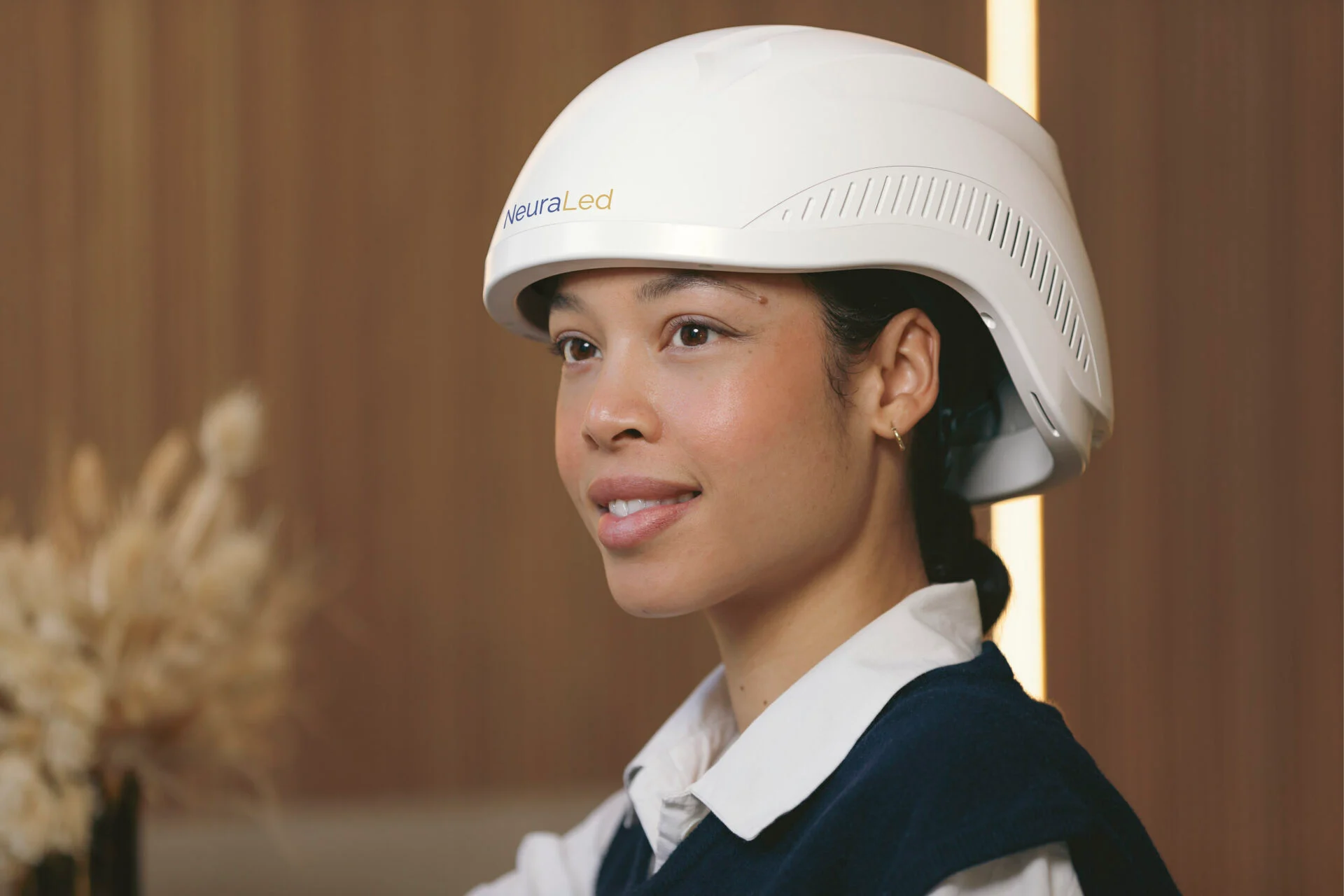
Shining light on your head to sharpen your brain sounds like a gadget-store promise, and plenty of the products making that promise are exactly that. Underneath the hype, though, sits a real and surprisingly well-studied biology. Light of the right wavelength can reach brain tissue and change how brain cells make energy. That is the whole idea behind photobiomodulation, and what follows is a plain-language walk through how it actually works, what the light does once it arrives, and where the science is solid versus still emerging.
What is photobiomodulation (red light therapy for the brain)?
Photobiomodulation is the use of specific wavelengths of red and near-infrared light to change how cells function. When it’s aimed at the head to reach brain tissue, it’s called transcranial photobiomodulation. It uses no drugs and no heat you would notice, and it works by delivering light energy to the parts of your cells that produce energy.
You’ll see it written a few ways: photobiomodulation, often shortened to PBM, transcranial PBM or tPBM when it targets the brain, and the older term low-level light or laser therapy. The light sits in the red and near-infrared band, roughly 600 to 1,100 nanometers. Red light is visible; near-infrared is not. The brain-focused devices lean on the near-infrared end, for a reason we’ll get to.
How does red light therapy work on the brain?
The light is absorbed by an enzyme in your mitochondria called cytochrome c oxidase. That absorption speeds up the cell’s energy production and raises its output of ATP, the molecule that powers nearly everything a neuron does. Tired or stressed brain cells make less ATP, and the light helps push that production back up.
Here’s the chain in a bit more detail. Cytochrome c oxidase is the final step in the mitochondrial assembly line that turns oxygen and nutrients into energy. Under stress, a molecule of nitric oxide can bind to this enzyme and slow it down. Near-infrared light appears to knock that nitric oxide loose, letting oxygen back in and restarting fuller energy production (brain photobiomodulation review). The jump in ATP, along with a brief, useful pulse of signaling molecules, then sets off the downstream effects that make the treated tissue work better. Animal work has shown this same enzyme responding directly to transcranial light (photobiomodulation of cytochrome c oxidase).
Why does the light have to be near-infrared?
Because near-infrared light penetrates deeper. Skin, skull, and tissue absorb and scatter visible light quickly, but there’s an optical window, roughly 650 to 1,100 nanometers, where light passes through most easily. Longer near-infrared wavelengths, around 1,064 to 1,070 nm, reach several centimeters into tissue, which is what lets them get near the cortex.
Visible red light, closer to 630 to 680 nm, does real work, but mostly nearer the surface, which is why it shows up in skin and wound devices more than brain ones. For the brain you need wavelengths that survive the trip through scalp and skull, and that points to the near-infrared end of the spectrum.
What does the light actually change inside the brain?
Four effects show up repeatedly in the research: more cellular energy, more blood flow and oxygen to the treated area, less inflammation, and signals that support neuroplasticity, the brain’s ability to build and strengthen connections. Together they shift brain tissue from a depleted, inflamed state toward a more active, better-fueled one.
Each piece has its own evidence. The rise in ATP is the energy story above. Studies have also measured increased cerebral blood flow and oxygen delivery after transcranial sessions, and tied cognitive gains directly to that better-oxygenated prefrontal cortex (cerebrovascular oxygenation and cognition). Separately, photobiomodulation calms the inflammatory signaling and overactive immune cells that accompany many brain problems (anti-inflammatory effects of photobiomodulation), and it appears to encourage the growth factors and rewiring behind neuroplasticity. No single one of these is a magic switch, but stacked together they explain why the treated tissue tends to function better.
Does more light work better?
No, and this is one of the most important and least advertised facts about photobiomodulation. It follows a biphasic dose-response: too little light does nothing, the right amount helps, and too much can stall or even reverse the benefit. That is why following a device’s tested settings matters far more than turning everything up.
Researchers describe this as an inverted-U curve. Benefit climbs with dose up to a point, then falls off, and very high doses can produce no effect or a negative one (brain photobiomodulation review). It’s the opposite of how people instinctively treat supplements or workouts, and it’s the single biggest reason to respect a tested protocol rather than improvise a longer, brighter session in hopes of a bigger result.
Does the light actually reach the brain, or just the scalp?
A fraction reaches the brain. Most of the light is absorbed or scattered by scalp and skull, but measurement studies show a real amount of near-infrared light arrives at the surface of the cortex, especially at the deeper-reaching wavelengths and with enough power behind them. The percentage that gets through is small, yet the brain is sensitive to it.
This is also why delivery design matters. Helmets spread many near-infrared emitters across the whole scalp, and some systems add an intranasal applicator to reach deeper midline structures through a thinner barrier. The goal in every case is to get enough of the right light to enough of the right tissue.
What is the brain evidence so far?
Promising, but still early. Controlled studies in healthy adults have shown gains in attention and working memory after near-infrared light to the prefrontal cortex (a 2022 randomized trial), and there’s encouraging work in brain injury and early cognitive decline. The catch is that most trials are small and the protocols vary, so the mechanism is far better established than the clinical proof for any one use. We go deeper on specific applications in our guides to red light therapy for brain fog and memory and red light therapy for concussion and TBI recovery.
Is red light therapy for the brain safe?
For most people it’s very well tolerated, with at most mild and short-lived effects like a temporary headache or a shift in sleep. Photobiomodulation has been studied in humans for decades, and these brain devices generally carry an FDA non-significant-risk designation. The real cautions are simple: use eye protection with laser-based devices, and check with a doctor first if you have a history of seizures, any bleeding in the brain, or are pregnant.
Where to go from here
Understanding the mechanism is the part that lets you cut through marketing, because once you know the light has to be the right wavelength, at the right dose, reaching the right tissue, most of the hype answers itself. If you want to keep learning and compare notes with people actually using these tools, the Brainnovation Network community lives in our app: download it on the App Store or Google Play.
Frequently asked questions
What wavelength of red light is best for the brain?
The cognitive studies cluster around 1,064 to 1,070 nm near-infrared light, because those longer wavelengths reach deepest into brain tissue. Some research also uses around 810 nm. Visible red light, near 630 to 680 nm, works closer to the surface and is less suited to brain targets.
How deep does red light penetrate into the brain?
Near-infrared light can reach a few centimeters into tissue, enough for a measurable amount to arrive at the surface of the cortex. Most of the light is absorbed or scattered by scalp and skull along the way, so the real depth depends heavily on the wavelength and the device’s power.
What is the difference between red light and near-infrared light?
Red light, roughly 630 to 680 nm, is visible and works mostly near the surface. Near-infrared light, roughly 800 to 1,100 nm, is invisible and penetrates deeper, which is why brain-focused devices rely on it. Both are absorbed by the same energy-producing enzyme inside cells.
Does red light therapy actually reach the brain, or only the scalp?
Both, with the scalp getting the most. Studies show a fraction of near-infrared light reaches the cortex, especially at deeper-penetrating wavelengths with adequate power. The amount is small, but brain cells are sensitive enough that small changes in their energy supply can still matter.
Can you overdo red light therapy on the brain?
Yes. Photobiomodulation follows a biphasic dose-response, so more is not better: too much light in a session can blunt or even reverse the effect. This is exactly why following the device’s tested protocol for time and intensity matters more than maximizing the dose.
Is red light therapy for the brain FDA approved?
Many of these devices carry an FDA non-significant-risk designation and are sold for general wellness rather than as approved treatments for specific brain conditions. Regulatory status varies by device and changes over time, so check the specific product rather than assuming.
What conditions is brain photobiomodulation studied for?
Research spans healthy-adult cognition, traumatic brain injury and concussion, mild cognitive impairment and dementia, mood, and stroke recovery. The strongest part of the picture is the mechanism work plus early clinical signals; firm proof is still emerging for most specific conditions.
How is red light therapy for the brain delivered?
Most often through a helmet or pad of near-infrared LEDs worn against the scalp, sometimes paired with an intranasal applicator to reach deeper midline structures. Sessions are usually short, a matter of minutes, several times a week, following the device’s protocol.
This article is for educational purposes and is not medical advice. The technologies discussed are wellness tools, not approved treatments for any medical condition. Talk with a qualified healthcare professional before starting any new device or protocol, especially if you have a diagnosed condition, take medication, or are recovering from a head injury.